

Articles · Art And Culture
Aesthetics of Sovereignty
Aesthetics of Sovereignty
Sarah Taylor
No reviews yet
Sign in to read online
Aesthetics of Sovereignty" explores how premodern religious communities employed narrative as a site to imagine ideal political worlds in ways that exceeded the capacity of formal philosophical and politicotheoretical discourse. Taking the Digambara Jain community of the ninth and tenth-century western Deccan as my primary focus, I argue that Jains theorized, modeled, and continually revised what it meant to be both a king and a Jain through literary and material improvisations with the narrative of the first Tīrthaṅkara Ādinātha (a genre known as the Ādipurāṇa). From the proposition that worldly sovereignty culminates in renunciation in Jinasēna’s Ādipurāṇa (c. 860 C.E.) and the devolution of courtly erotic love into devotional affect in Pampa’s Ādipurāṇaṃ (941 C.E.), to the vision of an ideal king as Jain devotee in the Cāvuṇḍarāya Purāṇaṃ (978 C.E.), my dissertation tracks shifting Jain experiments with language, genre, and artistic mediums that reflect broader attempts to imagine ideal worlds structured around perfected notions of worldly and spiritual sovereignty. In tracking these various Jain improvisations with the Ādipurāṇa, this dissertation demonstrates a broader Jain investment in the imaginative capacity of narrative to mediate between worldly and spiritual concerns. In so doing, I argue that Jains consistently sought to conceptually figure the worldly and spiritual, the political and religious, and even the sexual and the ascetic, as deeply imbricated social worlds rather than binaristic categories of human activity. By aestheticizing sovereignty, Jain poets created an imaginative space in which intense relations to the world could be made functional for Jain religious practice. The larger effect of this early medieval Jain political encounter, was to fundamental transform Jainism itself. What we are left with is a novel vision of Jainism: one that encourages subjects to let go of their loves only after holding onto them for a lifetime or three, one the demands renunciation of the world but only after you have conquered the eight directions as a cakravartin or sovereign emperor. Degree Type Dissertation Degree Name Doctor of Philosophy (PhD) Graduate Group South Asia Regional Studies First Advisor Daud Ali Read more
Details
- Author
- Sarah Taylor
- Publisher
- —
- Type
- Articles
- Language
- English
- Religion
- —
- Tradition
- —
- Subjects
- Art And Culture
- Series
- —
- Published
- 2016
- Pages
- 464
- Size
- 8.5 x 11 in
- Format
Something wrong on this page?
Related works
-
 यंग योगी जंबु कुमार
Dr. Rajendra Muni Shastri
यंग योगी जंबु कुमार
Dr. Rajendra Muni Shastri
-
 यशस्तिलक सोमदेव सूरि उच्चवास (भाग 1) (व्हि. 3)
Somdev Suriji Shrimad
यशस्तिलक सोमदेव सूरि उच्चवास (भाग 1) (व्हि. 3)
Somdev Suriji Shrimad
-
 यशस्तिलक ॲन्ड इंडियन कल्चर (अंग्रेजी)
K. K. Handiqui
यशस्तिलक ॲन्ड इंडियन कल्चर (अंग्रेजी)
K. K. Handiqui
- Veetrag Vigyan Pathmala (Part 3) Veetrag Vigyan Pathmala (Part 3) Dr. Hukumchand Bharill
-
 Veetrag Vigyan Pathmala (Part 2)
Dr. Hukumchand Bharill
Veetrag Vigyan Pathmala (Part 2)
Dr. Hukumchand Bharill
-
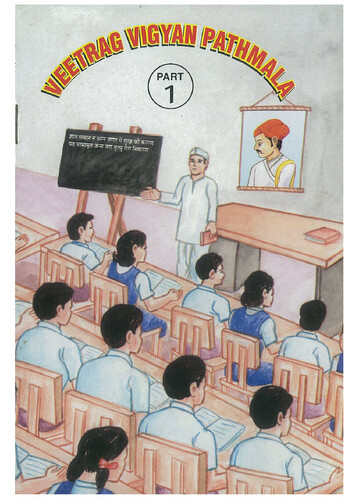 Veetrag Vigyan Pathmala (Part 1)
Dr. Hukumchand Bharill
Veetrag Vigyan Pathmala (Part 1)
Dr. Hukumchand Bharill
-
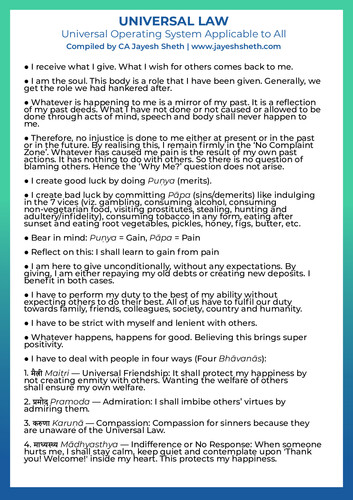 युनिवर्सल लॉ (अंग्रेजी)
Unknown
युनिवर्सल लॉ (अंग्रेजी)
Unknown
-
 त्रिशष्टी शलाका पुरुष चरित्र (भाग 6)
Helen M. Johnson
त्रिशष्टी शलाका पुरुष चरित्र (भाग 6)
Helen M. Johnson
-
 त्रिशष्टी शलाका पुरुष चरित्र (भाग 5)
Helen M. Johnson
त्रिशष्टी शलाका पुरुष चरित्र (भाग 5)
Helen M. Johnson
-
 त्रिशष्टी शलाका पुरुष चरित्र (भाग 4)
Helen M. Johnson
त्रिशष्टी शलाका पुरुष चरित्र (भाग 4)
Helen M. Johnson
Reader reviews
No reviews yet
Nobody has reviewed this book. Be the first.
Share your thoughts
If you’ve read this book, sign in to share what you made of it with other readers.