

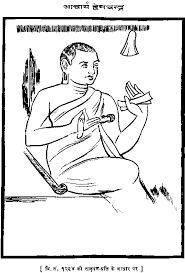
Acharya
Hemchandrasuri Acharya
Also known as Hemchandracharya, Shri Hemchandracharya, Shri Hemchandrasuri
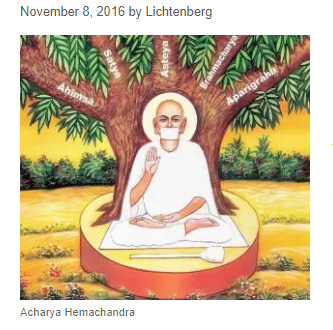
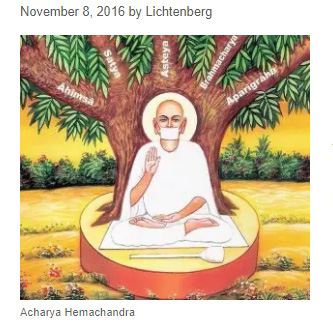
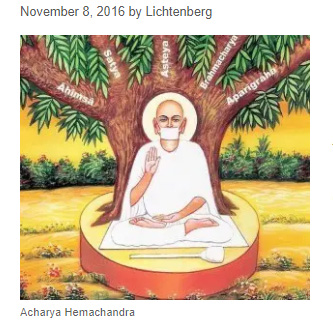
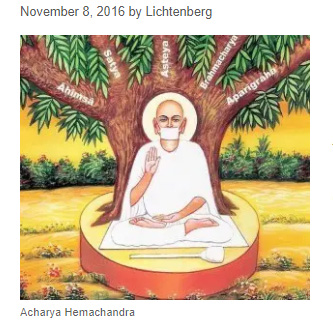
Acharya Hemachandra was an Indian Jain scholar, poet, and polymath who wrote on grammar, philosophy, prosody, and contemporary history. Noted as a prodigy by his contemporaries, he gained the title kalikālasarvajña, "the knower of all knowledge in his times". Death He announced about his death six months in advance and fasted in his last days, a Jain practice called sallekhana. He died at Anhilavad Patan. The year of death differs according to sources but 1173 is generally accepted. Works A prodigious writer, Hemachandra wrote grammars of Sanskrit and Prakrit, poetry, prosody, lexicons, texts on science and logic and many branches of Indian philosophy. It is said that Hemachandra composed 3.5 crore verses in total, many of which are now lost. Jain Pholosophy His systematic exposition of the Jain path in the Yogaśāstra and its auto-commentary is a very influential text in Jain thought. According to Olle Quarnström it is "the most comprehensive treatise on Svetambara Jainism known to us" Grammer This Sanskrit grammar was written in the style of Pāṇini. It has seven chapters with each chapter having four sections, similar to that of the grammar of Bhoja. The Siddha-Hema-Śabdanuśāśana also includes six Prakrit languages: the "standard" Prakrit (virtually Maharashtri Prakrit), Shauraseni, Magahi, Paiśācī, the otherwise-unattested Cūlikāpaiśācī and Apabhraṃśa (virtually Gurjar Apabhraṃśa, prevalent in the area of Gujarat and Rajasthan at that time and the precursor of Gujarati language). He gave a detailed grammar of Apabhraṃśa and also illustrated it with the folk literature of the time for better understanding. It is the only known Apabhraṃśa grammar. Mathematics Hemachandra, following the earlier Gopala, described the Fibonacci sequence in around 1150, about fifty years before Fibonacci (1202). He was considering the number of cadences of length n, and showed that these could be formed by adding a short syllable to a cadence of length n − 1, or a long syllable to one of n − 2. This recursion relation F(n) = F(n − 1) + F(n − 2) is what defines the Fibonacci sequence.[14][15] He (c. 1150 AD) studied the rhythms of Sanskrit poetry. Syllables in Sanskrit are either long or short. Long syllables have twice the length of short syllables. The question he asked is How many rhythm patterns with a given total length can be formed from short and long syllables? For example, how many patterns have the length of five short syllables (i.e. five “beats”)? There are eight: SSSSS, SSSL, SSLS, SLSS, LSSS, SLL, LSL, LLS As rhythm patterns, these are xxxxx, xxxx., xxx.x, xx.xx, x.xxx, xx.x., x.xx., x.x.x [16] Other works His other works are a commentary in rhetoric work Alankara Chudamani, Abhidhana-chintamani,[2][17] Pramana-mimansa (logic), Vitaraga-Stotra (prayers).[3] Read more
Books
58
Guru
Devachandra Suri
Sect
Shwetambar Murtipujak
-
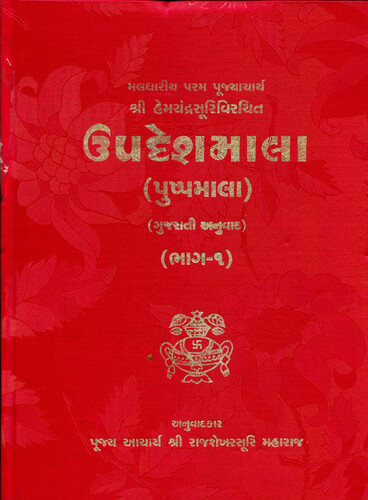 ઉપદેશમાલા ભાગ 01
Hemchandrasuri Acharya
ઉપદેશમાલા ભાગ 01
Hemchandrasuri Acharya
-
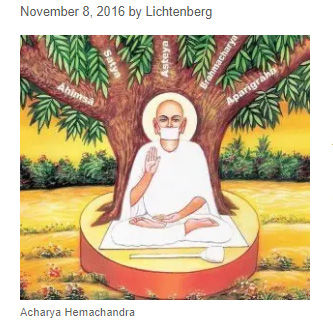 TRISHASHTI SHALAKA PURUSHA CARITRA VOL 6
Hemchandrasuri Acharya
TRISHASHTI SHALAKA PURUSHA CARITRA VOL 6
Hemchandrasuri Acharya
-
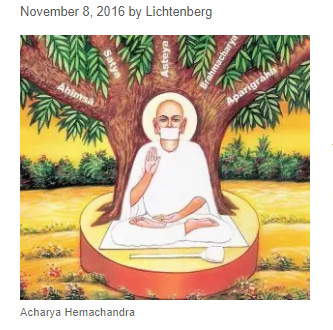 TRISHASHTI SHALAKA PURUSHA CARITRA VOL 5
Hemchandrasuri Acharya
TRISHASHTI SHALAKA PURUSHA CARITRA VOL 5
Hemchandrasuri Acharya
-
 TRISHASHTI SHALAKA PURUSHA CARITRA VOL 4
Hemchandrasuri Acharya
TRISHASHTI SHALAKA PURUSHA CARITRA VOL 4
Hemchandrasuri Acharya
-
 TRISHASHTI SHALAKA PURUSHA CARITRA VOL 3
Hemchandrasuri Acharya
TRISHASHTI SHALAKA PURUSHA CARITRA VOL 3
Hemchandrasuri Acharya
-
 TRISHASHTI SHALAKA PURUSHA CARITRA VOL 2
Hemchandrasuri Acharya
TRISHASHTI SHALAKA PURUSHA CARITRA VOL 2
Hemchandrasuri Acharya
-
 TRISHASHTI SHALAKA PURUSHA CARITRA VOL 1
Hemchandrasuri Acharya
TRISHASHTI SHALAKA PURUSHA CARITRA VOL 1
Hemchandrasuri Acharya
-
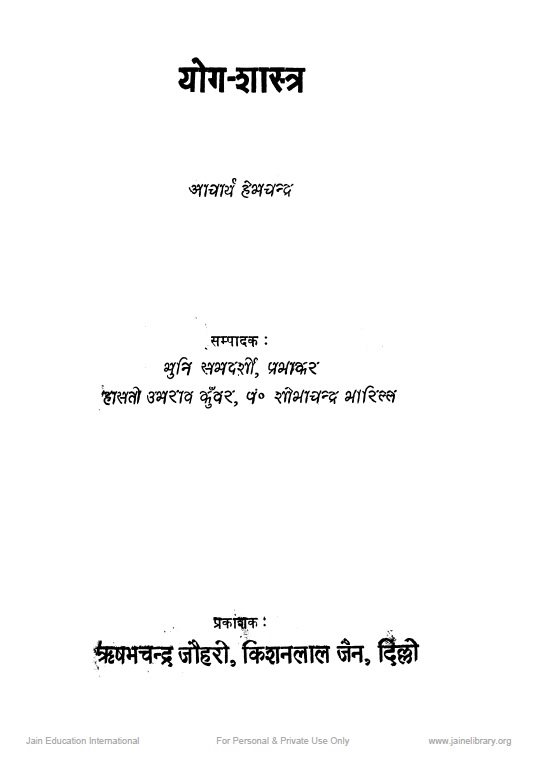 યોગશાસ્ત્ર
Hemchandrasuri Acharya
યોગશાસ્ત્ર
Hemchandrasuri Acharya
-
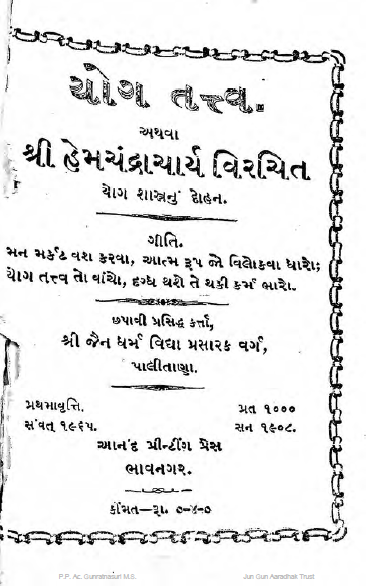 યોગ તત્વ
Hemchandrasuri Acharya
યોગ તત્વ
Hemchandrasuri Acharya
-
 પ્રસન્નતાની પરબ
Hemchandrasuri Acharya
પ્રસન્નતાની પરબ
Hemchandrasuri Acharya
-
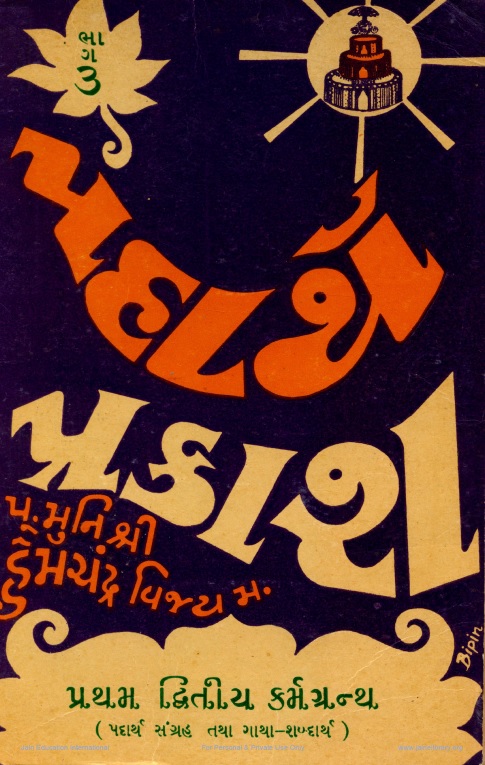 પદાર્થ પ્રકાશ - ૩
Hemchandrasuri Acharya
પદાર્થ પ્રકાશ - ૩
Hemchandrasuri Acharya
-
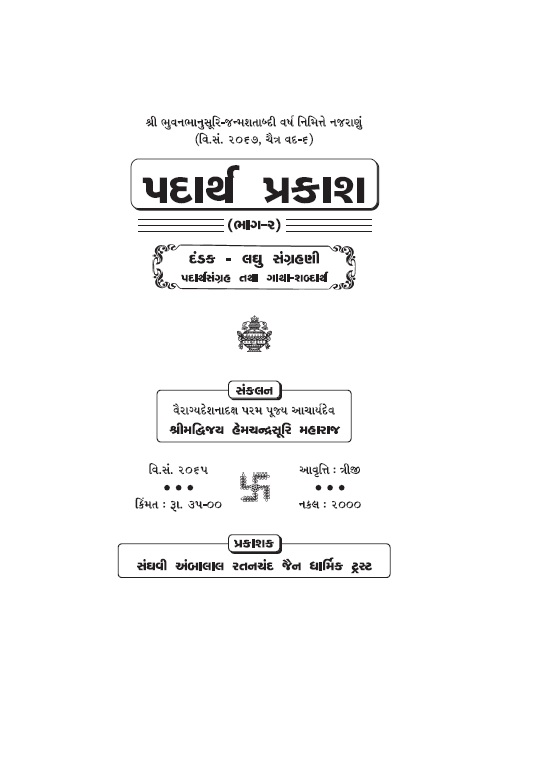 પદાર્થ પ્રકાશ - ૨
Hemchandrasuri Acharya
પદાર્થ પ્રકાશ - ૨
Hemchandrasuri Acharya
-
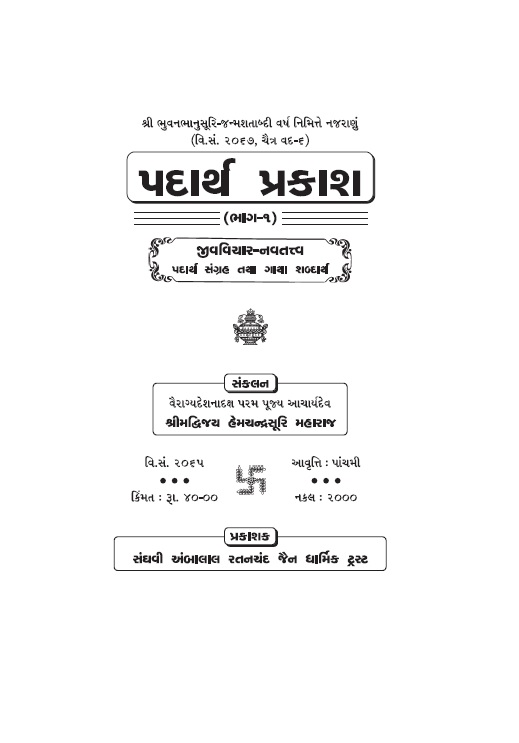 પદાર્થ પ્રકાશ - ૧
Hemchandrasuri Acharya
પદાર્થ પ્રકાશ - ૧
Hemchandrasuri Acharya
-
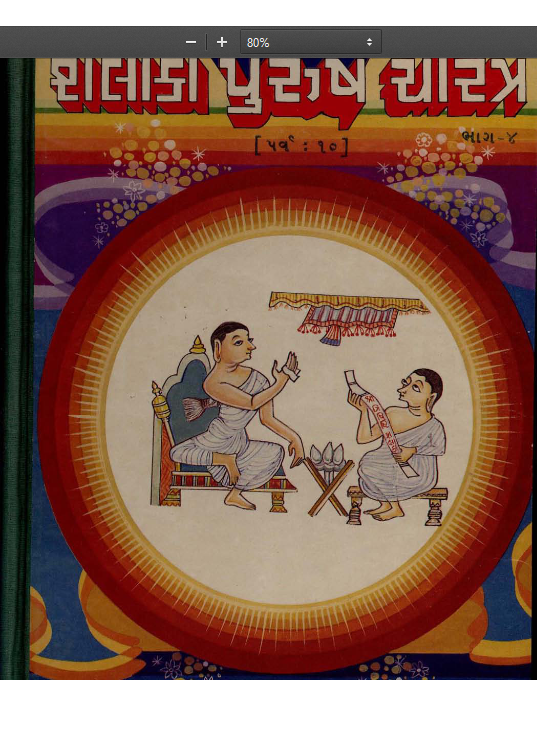 ત્રિષષ્ટિશલાકાપુરૂષ ચરિત્ર - 4
Hemchandrasuri Acharya
ત્રિષષ્ટિશલાકાપુરૂષ ચરિત્ર - 4
Hemchandrasuri Acharya
-
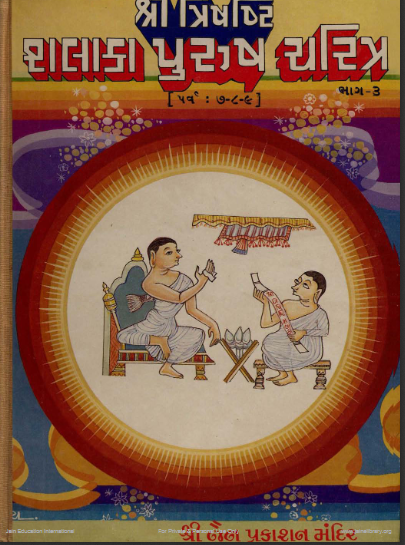 ત્રિષષ્ટિશલાકાપુરૂષ ચરિત્ર - 3
Hemchandrasuri Acharya
ત્રિષષ્ટિશલાકાપુરૂષ ચરિત્ર - 3
Hemchandrasuri Acharya
-
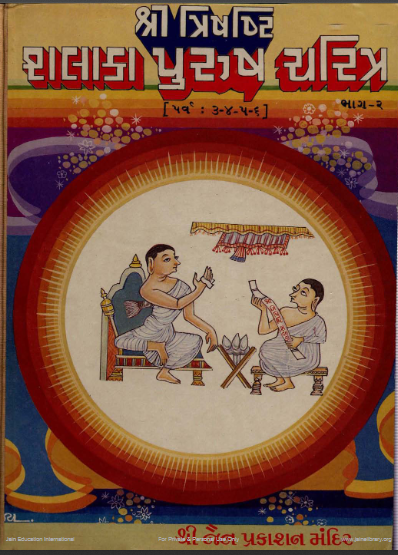 ત્રિષષ્ટિશલાકાપુરૂષ ચરિત્ર - 2
Hemchandrasuri Acharya
ત્રિષષ્ટિશલાકાપુરૂષ ચરિત્ર - 2
Hemchandrasuri Acharya
-
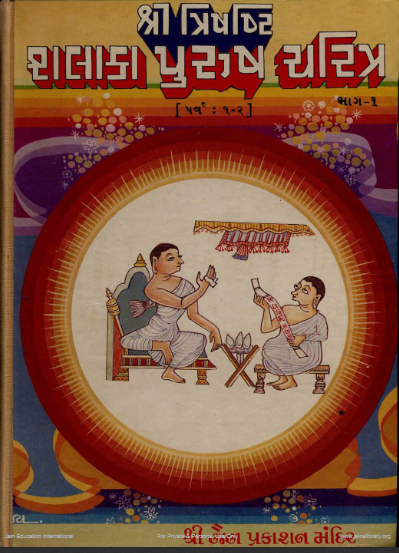 ત્રિષષ્ટિશલાકાપુરૂષ ચરિત્ર - 1
Hemchandrasuri Acharya
ત્રિષષ્ટિશલાકાપુરૂષ ચરિત્ર - 1
Hemchandrasuri Acharya
-
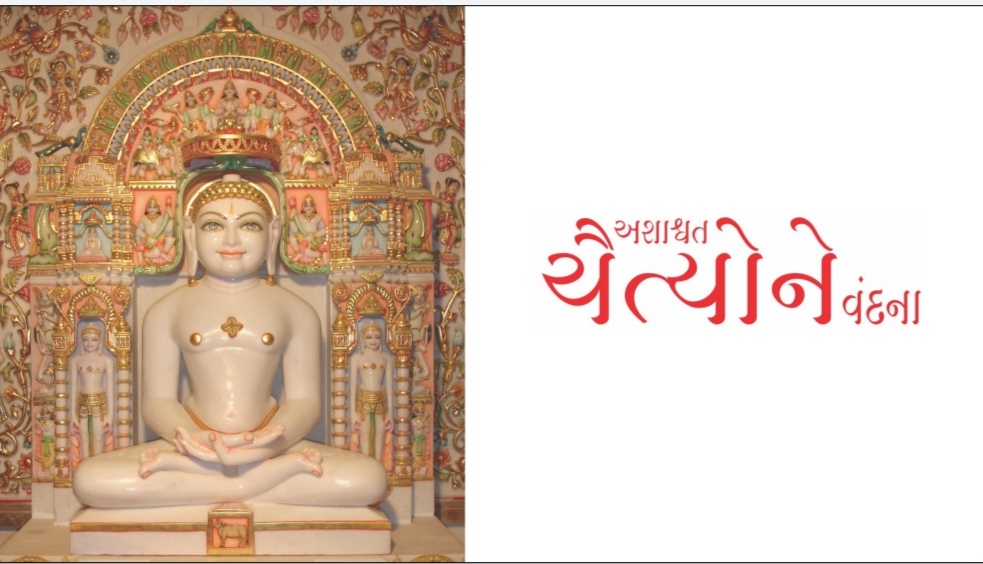 ત્રિલોક વંદના ( ભાગ-૨)
Hemchandrasuri Acharya
ત્રિલોક વંદના ( ભાગ-૨)
Hemchandrasuri Acharya
-
 ત્રિલોક વંદના ( ભાગ-૧ )
Hemchandrasuri Acharya
ત્રિલોક વંદના ( ભાગ-૧ )
Hemchandrasuri Acharya
-
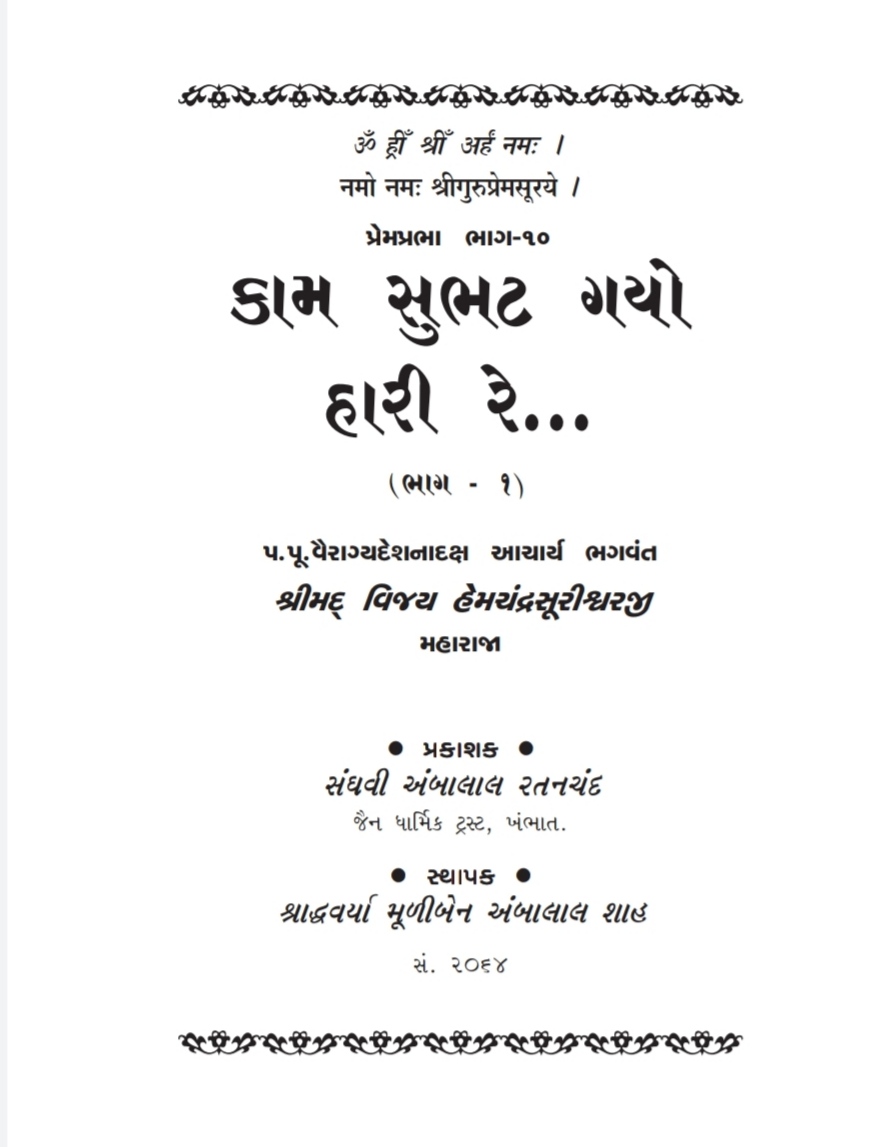 કામ સુભટ ગયો હારી રે (૧)
Hemchandrasuri Acharya
કામ સુભટ ગયો હારી રે (૧)
Hemchandrasuri Acharya
-
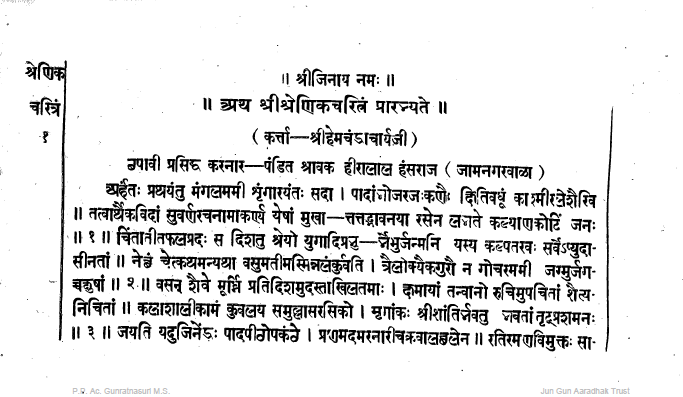 श्रेणिक चरित्र
Hemchandrasuri Acharya
श्रेणिक चरित्र
Hemchandrasuri Acharya
-
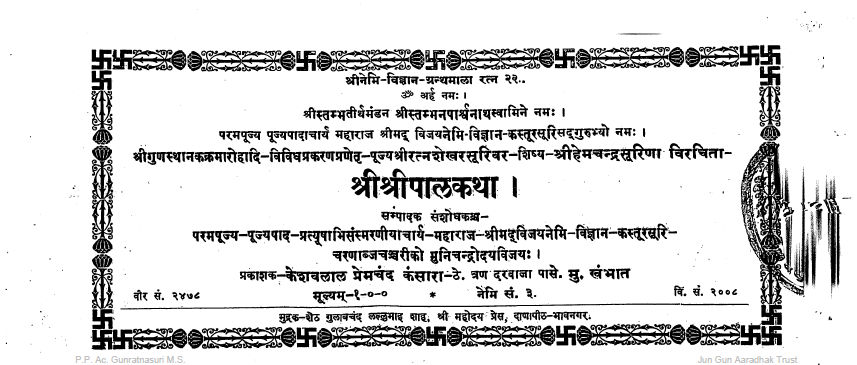 श्रीपाल कथा
Hemchandrasuri Acharya
श्रीपाल कथा
Hemchandrasuri Acharya
-
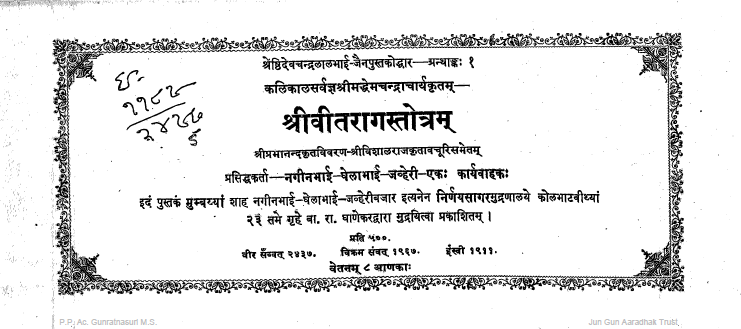 वीतराग स्तोत्रम्
Hemchandrasuri Acharya
वीतराग स्तोत्रम्
Hemchandrasuri Acharya
-
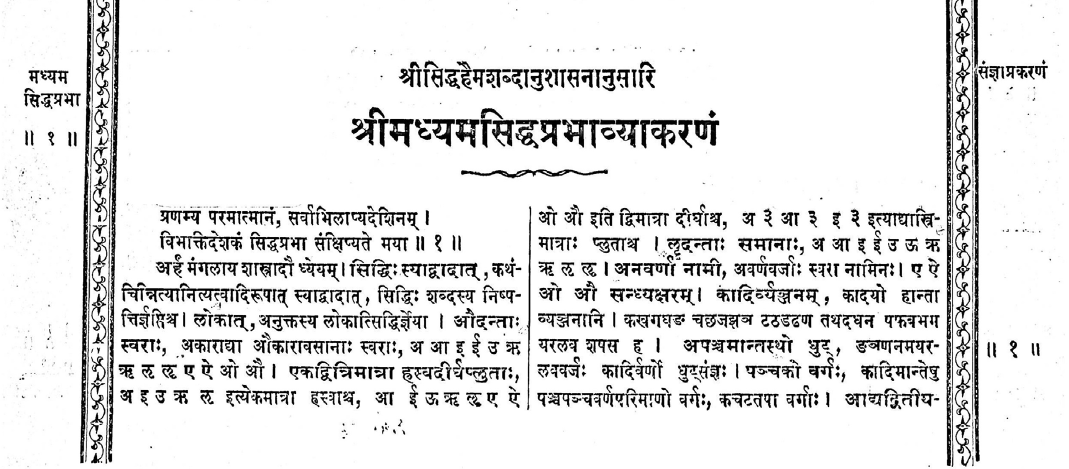 मध्यमसिद्धप्रभाव्याकरण
Hemchandrasuri Acharya
मध्यमसिद्धप्रभाव्याकरण
Hemchandrasuri Acharya
-
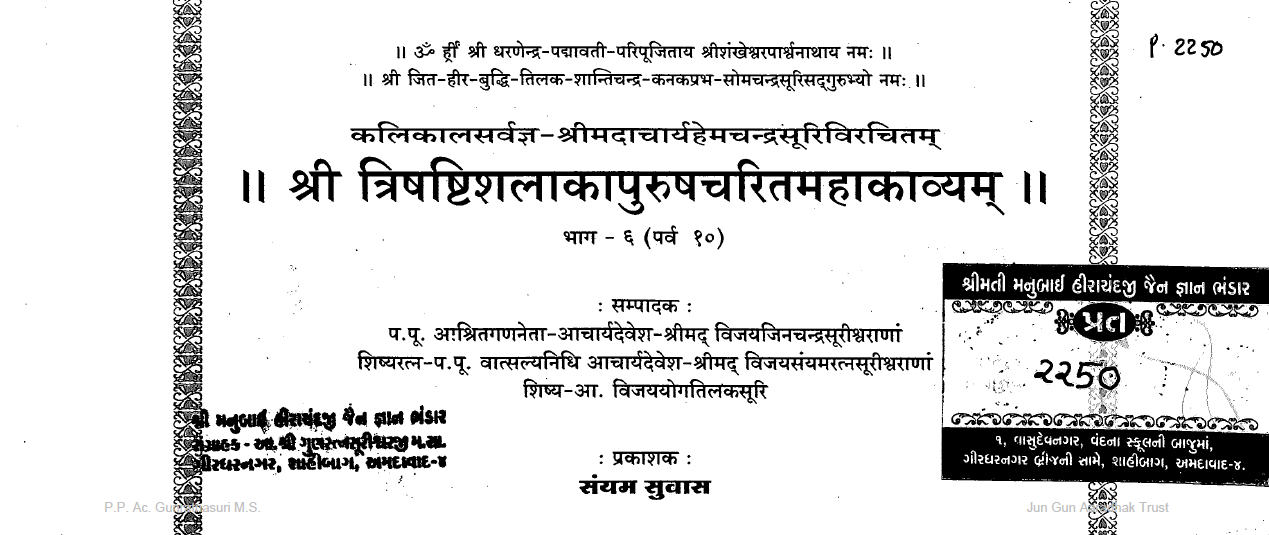 त्रिषष्टिशलाकापुरुषचरितमहाकाव्यम भाग-6
Hemchandrasuri Acharya
त्रिषष्टिशलाकापुरुषचरितमहाकाव्यम भाग-6
Hemchandrasuri Acharya